Slip and fall injuries can last for years, and brain, spine, and joint damage often worsens long after the bruises fade. Months later, you may still be limping, still losing words mid-sentence, and still hearing that you should be back to normal by now. That gap between how you feel and what everyone expects is exhausting.
You are not imagining it, and you are not healing wrong. At Fincher Law, we represent injured people across Kansas whose falls turned into permanent problems, and we document losses that have not fully arrived yet. Our team can evaluate what your recovery may actually require.


A fall compresses a great deal of force into a fraction of a second. Adrenaline then masks the damage for hours, which is why so many people tell us they felt fine at the scene and waved off an ambulance. By the time the real symptoms arrive, the fall already feels like old news to everyone else.
Several injuries tend to announce themselves late:
Delay does not mean the injury is minor; it means the injury took time to surface.
Not every fall causes lasting harm. When it does, the damage usually lands in a few categories that share one trait: They interfere with how you move, think, or sleep every day.
Falls also sent about 4.5 million older adults to emergency departments in 2024, so this is familiar ground for treating physicians. Our team at Fincher Law builds claims around that daily reality, not just the emergency room visit.
A traumatic brain injury (TBI) happens when a blow or jolt disrupts normal brain function. Falls are the dominant cause among older adults, and the Centers for Disease Control and Prevention reports that 81% of TBI-related emergency department visits in adults 65 and older come from falls. Lasting effects include memory problems, light sensitivity, mood changes, and trouble holding a conversation in a noisy room.
Families often notice the change before the injured person does. We ask about those observations because they document something a scan cannot show.
A broken hip rarely heals back to baseline. Surgery, months of physical therapy, and a walker are common, and some people never regain the independence they had the week before the fall.
Wrist and ankle fractures carry their own long tail. Hardware can loosen, range of motion can stay limited, and grip strength may never fully return.
Spinal injuries produce the chronic pain that reshapes an entire routine. Herniated discs, nerve compression, and vertebral fractures can require injections, fusion surgery, or lifelong pain management.
Sleep is the first thing to go for most of our clients. Missed sleep then worsens pain, concentration, and mood, which is how one injury quietly becomes several problems.
People often expect the costs of an ambulance ride and the first surgery. The costs that actually reshape a life show up much later.
After a serious fall, many people stop doing the things that once kept them steady. Walks get shorter, stairs get avoided, and social plans get declined.
That caution feels protective, but reduced activity weakens the exact muscles that prevent the next fall. Anxiety, depression, and isolation frequently follow, and they are legitimate injuries under the law.
Long-term losses rarely fit on a single medical bill. A few categories come up repeatedly in the claims we handle:
Those losses separate a quick offer from a full accounting, and they also drive the average slip-and-fall settlement amounts people find online.
If your symptoms have outlasted everyone's expectations, we can review what happened and what it may cost you going forward. Call 785-430-5770 to request a free case evaluation.
State law has changed in ways that matter for exactly this kind of injury. A few rules do most of the work.
For decades, your rights depended on whether you counted as an invitee or a licensee. That changed in Jones v. Hansen, 254 Kan. 499 (1994), where the Kansas Supreme Court abolished the distinction for lawful entrants.
Property owners now owe every lawful visitor reasonable care under all the circumstances. Courts weigh the foreseeability of harm, the size of the risk, the benefit of leaving the condition in place, and the burden of fixing it. Our attorneys apply that test when evaluating liability in a slip-and-fall accident.
Insurers almost always argue that you should have seen the hazard. Under K.S.A. 60-258a, your claim is barred only if your negligence was not less than the causal negligence of the parties you claim against.
Below that line, each party is liable for its proportionate share. A 20% fault finding reduces a $100,000 award to $80,000; therefore, every percentage point is worth contesting.
This rule matters more than any other for a permanent injury. In Hilburn v. Enerpipe Ltd. (2019), the court struck down the statutory cap on noneconomic damages as facially unconstitutional. That decision rests on Section 5 of the Kansas Constitution Bill of Rights, which protects the right to a jury trial.
A jury may now value your pain, lost sleep, and lost independence without a statutory ceiling.
Here is the hard part: The law asks you to act before your body finishes telling you what happened.
Under K.S.A. 60-513(a)(4), you generally have 2 years to file a personal injury lawsuit. Subsection (b) softens that in an important way.
When the fact of injury is not reasonably ascertainable right away, the period does not begin until it becomes reasonably ascertainable to you. No action may begin more than 10 years after the act, regardless of when symptoms appeared.
Other timing rules can apply. A person who is a minor or has an incapacity when the claim arises may file within one year after the disability is removed, subject to an eight-year outer limit under K.S.A. 60-515.
Falls on city or county property add a step. K.S.A. 12-105b(d) requires written notice to the municipal clerk before an action begins, and the municipality has up to 120 days to act on the claim.
K.S.A. 44-501b(d) governs falls at work and makes workers' compensation the exclusive remedy against your employer. However, you may still be able to bring a claim against a different property owner.
Protecting a long-term claim comes down to a short sequence:
That record lets us prove future losses rather than argue about them. At Fincher Law, we handle slip and fall claims and build the medical timeline alongside the legal one.
People often bring us these questions once the early swelling fades and the real problems start.
Headaches, memory trouble, and mood changes can develop over days or weeks. We encourage clients to report every new symptom to their doctor, because late documentation is still documentation.
Generally no, because a signed release closes the claim for good. We evaluate the full medical picture before settlement so future care is included in the calculation.
No. The statutory cap on noneconomic damages was struck down in 2019, so a jury may value those losses without a ceiling.
You must deliver written notice to the municipal clerk before you file an action, and the municipality has up to 120 days to respond. We prepare that notice with the required details.
Workers' compensation is the exclusive remedy against your employer. When a different business or property owner created the hazard, we can pursue a separate claim against that party.
A rating from your treating physician converts a lasting limitation into medical evidence. We use it to support future care costs and reduced earning capacity.
If your balance, memory, or pain still is not right months after a fall, that is worth a serious conversation.
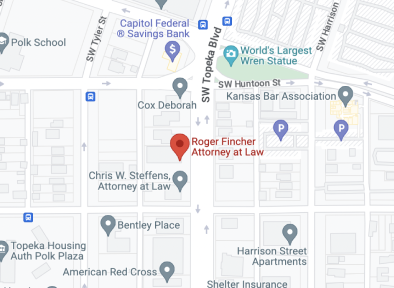
Our founding attorney has practiced personal injury law in Kansas since 1993, and our office at 1263 SW Topeka Blvd serves injured people statewide. We work on a contingency fee basis, so you can ask questions before committing to anything.
Our team looks at what your injury will require next year, not only what it cost last month. We can explain your legal options and what a full accounting of your losses may include.
Call 785-430-5770 or reach us through our contact page to schedule a free case evaluation.


How Can We Help You?
How Can We
Help You?
Schedule a Free Consultation Now By Contacting
Our Team at (785) 430-5770 or by completing the form below
Schedule a Free Consultation Now
By Contacting Our Team
at (785) 430-5770
"*" indicates required fields