Personal injury settlement negotiation is the exchange of demands, offers, and counteroffers that determines the final value of your injury claim. Insurers often open that exchange early, while you are still in treatment and before anyone knows what your recovery will cost. An offer at that stage reflects the expenses already in the file, not the surgeries, therapy, or lost income still ahead.
State law also shapes the number, because fault percentages, insurance repayment rights, and filing deadlines all change what an insurer will pay. Fincher Law negotiates these claims for injured people in Topeka, keeping the discussion anchored in documented losses rather than pressure. You can ask our attorneys to review an offer and the accompanying release before you sign anything.
Negotiation is a comparison between two files, and the better-documented one sets the terms. Our team builds that file before we ever name a number.
Timing matters as much as content. We generally wait until you reach maximum medical improvement, the point at which your condition stabilizes and your physicians can describe what comes next. Settling earlier locks in a value for injuries no one has finished measuring.
A settlement negotiation typically moves through the following stages:
Every stage depends on evidence gathered earlier, which is why a claim's strength is often decided long before the first offer arrives.


A few statutes do more to move settlement numbers than any negotiating tactic. Each one hands the insurer a lever and gives us a response.
State law gives an injured person 2 years to file a personal injury action, and the limitation period begins when the act first causes substantial injury. Adjusters track that date as closely as we do. An offer that seemed too low in month six can become the only offer available in month 23.
The deadline is leverage, not just a rule. Filing before it expires keeps every option open, including a jury trial. Once it passes, an insurer has no obligation to pay at all.
The comparative negligence statute bars recovery unless your share of the negligence is less than the combined negligence of the parties you claim against. Damages are then reduced in proportion to your share.
Consider a claim valued at $100,000 in which the adjuster assigns you 30% fault. The offer drops to $70,000. If your share equals or exceeds the other side's, recovery disappears altogether.
That arithmetic explains why adjusters spend so much effort on fault. We respond with scene photographs, traffic citations, and witness statements that pin the percentage where the evidence puts it.
Auto policies here include personal injury protection, known as PIP, which pays early medical expenses regardless of fault. Under the no-fault threshold statute, you cannot recover pain and suffering unless your medical treatment has a reasonable value of $2,000 or more.
The dollar amount is not the only path. The threshold also lifts when the injury involves permanent disfigurement, a fracture to a weight-bearing bone, or a compound, comminuted, displaced, or compressed fracture. Loss of a body member, permanent injury, permanent loss of a bodily function, and death qualify as well.
Adjusters check this threshold before placing any value on pain and suffering. Meeting it opens a category of damages the insurer would otherwise exclude.
PIP pays first, but it does not pay permanently. Under the reimbursement statute, your PIP insurer holds a lien against your recovery to the extent of the duplicative benefits it already paid.
That lien is not fixed. It shrinks by the percentage of negligence attributed to you, and the court fixes attorney fees that the insurer and the injured person pay proportionately. Both rules can move thousands of dollars between the gross settlement and the amount that reaches you.
Timing carries a penalty here as well. When an injured person does not file within 18 months, the claim for duplicative damages assigns to the PIP insurer. Fincher Law audits the lien before any settlement is signed, because an acceptable-looking number can shrink once reimbursement is applied.
Value is not the number the adjuster opens with. It is the sum of losses you can prove, sorted into two categories that insurers treat differently.
Economic damages are the losses supported by receipts, invoices, and pay records. They are the easiest to defend and the first ones an insurer will test.
Several categories of documented financial loss belong in a demand:
Each entry needs a supporting document, because an adjuster will discount anything you cannot prove.
Non-economic damages cover harm that no invoice captures. They carry real weight in negotiation, and they are where offers vary most.
A demand may also account for the following personal losses:
No statutory cap applies because the Kansas Supreme Court struck down the limit in Hilburn v. Enerpipe Ltd. as a violation of the right to a jury trial. Policy limits still set a practical ceiling: The minimum required coverage is $25,000 per person and $50,000 per accident.
An offer that ignores future care or an unresolved reimbursement claim can still look reasonable on paper. Call our team at 785-510-2259 before you accept a number or sign a release.
Adjusters work within authority limits and internal guidelines, and their job is to close claims at the lowest defensible number. Recognizing the common approaches keeps you from handing over material that weakens your own claim.
State insurance law sets boundaries. The unfair claim settlement practices statute prohibits failing to act reasonably promptly in response to communications regarding claims. It also bars refusing to settle in good faith once liability is reasonably clear, and forcing litigation by offering substantially less than the amount ultimately recovered.
Insurers request recorded statements early, often within days of the crash, while you are medicated and unsure of the full picture. A casual remark that you feel fine becomes a line in the file that reappears later.
Early offers follow the same logic. An insurer that resolves a claim before treatment is complete never pays for the care that follows. Our attorneys take these calls so the record stays accurate.
Delay is itself a negotiating position. Medical bills accumulate while a claim sits, and financial pressure moves people toward numbers they would otherwise reject.
Insurers also dispute the treatment itself. A gap in care, an extended course of therapy, or a prior injury can each be grounds to discount an offer. We respond with provider narratives that separate the current injury from any preceding factors.
At Fincher Law, we start with the file, not the phone call. Our team collects complete medical records, itemized billing, wage documentation, and any provider narratives explaining your restrictions.
From there, the work turns specific. We calculate the reimbursement obligation, contest fault percentages that the evidence does not support, and answer each stated reason for a low offer with supporting documentation. When an insurer will not move, we file in court before the limitation period expires.
Negotiation continues after filing in most claims. Litigation changes the insurer's risk calculation, and many cases resolve through mediation once discovery clarifies the facts.
Injured people ask us these questions once an offer is on the table.
Yes, as long as your share of the negligence stays below the other side's. Your recovery is then reduced by the percentage assigned to you.
Usually yes, because your PIP insurer holds a lien for duplicative benefits already paid. Your percentage of fault reduces that lien.
We document the reasons the offer falls short and, when negotiation stalls, file the case in court. Litigation often reopens discussions that had stopped.
No statutory cap applies because the state's highest court struck down the non-economic damages cap in 2019. Available policy limits still affect what an insurer can pay.
We advise against it in most claims, because a release ends the claim permanently. Waiting for maximum medical improvement lets your physicians describe the care still ahead.
An insurer has little reason to improve an offer once the filing deadline passes. We track that date so the filing option stays open.
A settlement offer that ignores your personal injury protection lien can look reasonable and still leave you short.
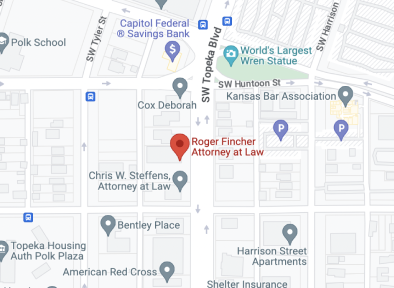
Our attorneys read the offer, the reimbursement obligation, and the release language together, because those three documents decide what you actually keep. We handle car accident, trucking, motorcycle, premises liability, and product liability claims from an office in Topeka, Kansas. Every claim starts from the same point: a complete file assembled before anyone names a number.
Personal injury settlement negotiation moves faster when someone answers the adjuster with records rather than arguments. Ask us to review what is on the table before you respond, and bring the release along with the offer. A free case evaluation costs nothing and takes less time than a second round of counteroffers.
Call 785-510-2259 or reach our Topeka team through the contact page.
Schedule Your
Free Consultation



How Can We Help You?
How Can We
Help You?
Schedule a Free Consultation Now By Contacting
Our Team at (785) 430-5770 or by completing the form below
Schedule a Free Consultation Now
By Contacting Our Team
at (785) 430-5770
"*" indicates required fields