Bad faith describes an insurer that mishandles a valid claim, and Kansas treats those disputes differently than most states. If your insurance company has gone quiet, denied a claim you paid premiums on for years, or offered a fraction of what your treatment actually cost, your frustration is well founded.
Here is the part that catches people off guard: You cannot file a separate bad faith lawsuit in this state. Instead, you can use the remedies the Legislature built into the insurance code, including attorney fees, interest on overdue benefits, and a regulator with authority over claim handling. At Fincher Law, we read the policy, the denial letter, and the claim file before anyone treats your claim as closed, and our team is ready to review where yours stands.


A Personal Injury case can change everything
Every insurance policy is a contract, and every contract carries an implied duty of good faith and fair dealing. Bad faith is the label for conduct that breaks that duty: refusing to investigate, denying a claim without a basis in the policy, or staying silent while your bills pile up.
Not every denial qualifies. Insurers can disagree with you about coverage, who caused a crash, and what an injury is worth.
A disagreement becomes something more when the insurer has no reasonable basis for its position and handles your claim as though it does not matter. That distinction is where most of these disputes are won or lost.
The vocabulary is what confuses people. Search the phrase, and you will find national pages describing bad faith lawsuits, punitive awards, and headline verdicts. Most of that describes other states, not this one.
The label matters because the two situations follow different rules and carry different remedies.
A first-party claim is one you file with your own insurer. Personal injury protection benefits after a crash, a homeowners claim, and a claim against your own uninsured and underinsured motorist coverage all fall in this category. State law requires policies to carry uninsured motorist coverage matching the policy's bodily injury liability limits, along with an underinsured motorist provision.
A third-party claim is one someone else brings against you. Your insurer controls the defense and decides whether to settle within your policy limits, which puts your financial exposure in its hands.
The Kansas Supreme Court answered this question directly in 1980. In Spencer v. Aetna Life & Casualty Insurance Co., the court wrote, "We hold the tort of bad faith is not recognized in Kansas."
The court did not reason that insurers should escape accountability. The court found that the Legislature had already assembled a detailed set of protections: Recovery on the contract, costs and interest, attorney fees, and oversight by the state insurance regulator.
Adding a new tort on top of that framework, the court decided, belonged to the Legislature, not the judiciary.
The practical effect is narrow but important. A policyholder here pursues breach of contract and the statutory remedies attached to it, rather than a standalone bad faith tort. That changes how the claim is framed, which evidence matters, and what an insurer's exposure looks like.
Losing the tort claim does not leave you without leverage. Several separate paths carry real financial consequences for an insurer that mishandles a legitimate claim.
This provision does the most work in insurance disputes here. K.S.A. 40-256 applies when judgment is entered against an insurer that "refused without just cause or excuse to pay the full amount of such loss." In that situation, the court must allow the policyholder reasonable attorney fees as part of the costs.
One exception limits it. If the insurer made a tender before the action was filed and the amount recovered does not exceed that tender, no such costs are allowed.
The message to insurers is direct: Stonewalling a valid claim risks paying for the attorney who forced the issue.
Kansas is a no-fault state, so your own policy pays personal injury protection benefits, commonly shortened to PIP, after a crash. Those benefits are overdue if the insurer does not pay within 30 days of being furnished written notice, and overdue payments carry simple interest at 18% per year.
K.S.A. 40-3111 supplies the second piece. An attorney is entitled to a reasonable fee for representing someone in an action for overdue benefits when the court finds that the insurer unreasonably refused to pay or unreasonably delayed proper payment.
Picture a driver whose physical therapy invoices sit unpaid for four months while the adjuster asks for one more record. The interest and fee provisions put a price on that delay.
Third-party situations carry the strongest duty, and the court addressed it in Bollinger v. Nuss. An insurer defending and settling claims against its insured, the court held, "owes to the insured the duty not only to act in good faith but also to act without negligence."
Courts call this the equal consideration doctrine. An insurer may weigh its own interests, but it must give the insured's interests at least equal weight when a settlement offer arrives within policy limits.
When an insurer rejects a reasonable offer inside the limits and a jury later returns a verdict above them, the insured may pursue the insurer for that excess judgment. Claims like these sit at the edge of ordinary Kansas personal injury claims, and the analysis begins with the claim file.
The Legislature also wrote down what unacceptable claim handling looks like. K.S.A. 40-2404(9) catalogs the claim settlement practices the state treats as unfair, and a few of them surface constantly in the disputes we handle:
One limit matters here. The statute reaches conduct committed flagrantly, or so frequently that it indicates a general business practice, rather than a single adjuster's mistake.
The Commissioner of Insurance enforces the statute and may issue cease-and-desist orders, impose monetary penalties, suspend or revoke a license, and order restitution under K.S.A. 40-2407. Filing a complaint with the Kansas Insurance Department creates a record of the conduct, though it does not resolve the money side of your claim.
Documentation separates a frustrating claim from a provable one. When an insurer starts behaving unreasonably, a few steps protect your position:
Those records are exactly what a court examines later to decide whether an insurer had just cause for its position.
If an insurer has denied your claim or stopped responding, our team can review the file and tell you where it stands. Call Fincher Law at (785) 430-5770, or see how we handle insurance disputes after a crash when negotiations stall.
Nothing ends a strong claim faster than a missed date, and these disputes involve more than one clock.
A claim for breach of an insurance contract falls under K.S.A. 60-511, which allows five years to bring an action on a written agreement or contract. That window is longer than the one for most injury claims in this state. People assume there is plenty of time, then learn the injury deadline passed while the adjuster was still reviewing the file.
Your policy runs its own clock, too. Notice provisions, proof-of-loss requirements, and suit limitation clauses live in the contract, and insurers can rely on them.
Check the notice deadlines your policy sets when a dispute begins, not after. We pull the policy and the claim file early for that reason.
These questions come up in nearly every conversation we have about a denied or delayed claim.
No. The Kansas Supreme Court rejected an independent bad faith tort, so these disputes proceed as breach of contract actions with statutory remedies attached.
It describes a refusal to pay that has no reasonable basis in the policy or the facts. A court decides the question case by case under K.S.A. 40-256.
When a court enters judgment against an insurer that refused payment without just cause or excuse, the statute requires the insurer to pay reasonable attorney fees as costs.
Those benefits are overdue if the insurer does not pay within 30 days after receiving written notice, and overdue amounts carry 18% simple interest per year.
If a verdict later exceeds those limits, you may be able to pursue your insurer for the excess judgment based on its duty to give your interests equal consideration.
It creates a regulatory record and can prompt a response, but it does not award compensation or replace pursuing your own claim.
Being told no by the company you paid to be there carries its own kind of stress, and it usually arrives when the bills are already stacking up.
These disputes turn on documents: The policy language, the claim file, the adjuster's notes, and the timeline of what was requested and when. We read those closely before forming a view, and we tell people plainly when an insurer's position is defensible.
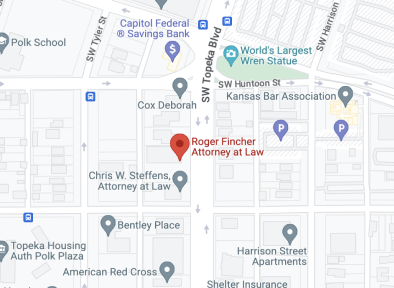
Roger Fincher and Jennifer Bradford handle these claims from our Topeka office, representing injured people and policyholders statewide on a contingency fee basis.
If an insurer has denied, delayed, or underpaid your claim, we can evaluate where it stands and which remedies may apply. Call us at (785) 430-5770 or reach out through our contact page to schedule a free case evaluation.
Schedule Your
Free Consultation



How Can We Help You?
How Can We
Help You?
Schedule a Free Consultation Now By Contacting
Our Team at (785) 430-5770 or by completing the form below
Schedule a Free Consultation Now
By Contacting Our Team
at (785) 430-5770
"*" indicates required fields