Kansas law allows people injured by defective products to pursue compensation from the companies that made and sold them. Fincher Law represents injured clients throughout Kansas, including Overland Park and the surrounding Johnson County communities. Our attorneys examine how the product failed, trace every company in the distribution chain, and document the full cost of the injury.
Product cases turn on engineering records, testing data, and warning language that manufacturers do not hand over voluntarily. An Overland Park product liability lawyer can demand those materials, retain qualified experts, and handle the manufacturer's insurer while you focus on treatment. Call Fincher Law at 785-510-2259 for a free case evaluation.
Product liability claims are different from ordinary injury claims. The defendant is usually a corporation with in-house counsel, retained engineers, and an insurer that litigates hard. Fincher Law handles product liability as a core part of our Kansas personal injury practice.
Our team works to preserve the product itself, because the physical evidence often decides the case. We request design files, quality-control records, prior complaint histories, and recall documentation. Where the facts support it, we retain engineers and other qualified experts to explain the failure to a jury.
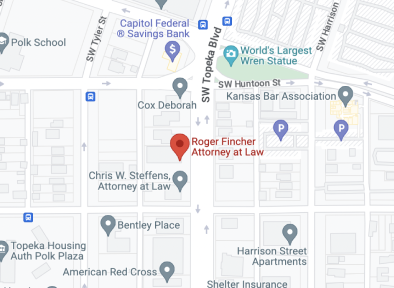
Fincher Law is based in Topeka and represents clients across Kansas, including Overland Park. Cases filed in Johnson County are heard at the Johnson County District Court in Olathe, and we manage the filing, discovery, and negotiation from start to finish.
The Kansas Product Liability Act governs these claims. Under K.S.A. 60-3302, a product liability claim covers harm caused by a product's design, manufacture, formula, assembly, installation, testing, warnings, instructions, packaging, or labeling. That definition is broad, and it merges older theories of negligence, strict liability, and breach of warranty into a single claim.
Most Kansas cases involve one of three types of defects.
A design defect exists when a product is dangerous even though it was built exactly as intended. Every unit in the product line carries the same risk. These cases often compare the manufacturer's design against a safer alternative that was available and practical at the time.
A manufacturing defect occurs when a specific unit deviates from its design. A cracked weld, a contaminated batch, or a missing fastener can turn a safe design into a dangerous product. Because the flaw is limited to certain units, quality-control and inspection records carry real weight.
Some products remain dangerous no matter how carefully they are designed. Manufacturers must warn users about those risks and give instructions for safe use. Under K.S.A. 60-3305, that duty does not extend to dangers that are patent, open, or obvious to a reasonable user.


A Product Liability can change everything
Our attorneys review claims involving consumer goods, industrial equipment, vehicles, and medical products. Common examples include the following:
If your injury involved a product not on this list, our team can still review it.
More than one company may share responsibility for a single defective product. Kansas allows claims against manufacturers, distributors, and sellers, though the rules differ by role.
Kansas defines a manufacturer as a product seller who designs, produces, fabricates, constructs, or remanufactures a product or a part. Component makers can be liable alongside the company whose name appears on the finished product. That distinction matters when one part, such as a battery cell or a valve, caused the failure.
Kansas limits the circumstances under which a non-manufacturing seller is liable. Under K.S.A. 60-3306, a seller may avoid liability by showing it did not know about the defect, could not have discovered it through reasonable care, and did not manufacture the product. The seller must also show that the manufacturer can be served in Kansas and that a judgment against the manufacturer would reasonably be collectible.
Workers hurt by defective machinery on the job are not limited to workers' compensation. K.S.A. 44-504 allows an injured worker to take compensation benefits and pursue a separate action against a negligent third party. Shorter internal deadlines apply to these claims, so we review them early.
Kansas gives injured people two years to file most personal injury actions, including product liability claims, under K.S.A. 60-513. The clock generally starts when the injury first causes substantial harm or becomes reasonably ascertainable. Missing that deadline usually ends the claim, no matter how strong the evidence is.
Kansas also measures a product's useful safe life. Under K.S.A. 60-3303, when harm occurs more than 10 years after delivery, the law presumes the useful safe life had expired, and only clear and convincing evidence can rebut that presumption.
Several exceptions exist, including:
You deserve answers after a Product Liability


Kansas law does not treat every loss the same way. Damages in these cases fall into two broad categories.
Economic damages cover documented financial losses. They include emergency care, surgery, rehabilitation, future medical costs, lost wages, reduced earning capacity, and property damage. Our attorneys gather billing records, employment records, and expert projections to support those figures.
Non-economic damages address pain and suffering, disfigurement, and loss of enjoyment of life. Kansas once capped these damages by statute. In 2019, the Kansas Supreme Court held in Hilburn v. Enerpipe Ltd. that the cap violated the right to trial by jury under Section 5 of the Kansas Constitution Bill of Rights.
The annotations to K.S.A. 60-19a02 reflect that ruling. How it affects any individual case depends on the facts and the current state of the law.
Manufacturers and their insurers rely on a familiar set of statutory defenses. Anticipating them shapes how we build the claim from the beginning.
The steps you take in the first days often determine what evidence survives.
Preserving the product matters most. Once it has been discarded, independent testing becomes impossible.
You may have a claim if a product caused your injury and it was defective in design, manufacture, or warnings. You do not need to prove that the manufacturer intended any harm. Our attorneys review the product, your medical records, and the circumstances of the failure before advising you about your options.
Two years applies in most cases, under K.S.A. 60-513. That period generally runs from the date the injury becomes reasonably ascertainable rather than the date you purchased the product. Waiting also raises the risk that the product, the records, or key witnesses disappear.
Not always. Kansas merges negligence, strict liability, and warranty theories into a single product liability claim, so the focus is whether the product was defective and unreasonably dangerous. Evidence of carelessness can still strengthen a case, particularly where a company knew about earlier failures.
A recall is useful evidence, but it does not decide the case on its own. It can show that the manufacturer knew about the hazard, and it often identifies the exact defect and the affected lot numbers. You can also bring a claim involving a product that was never recalled.
Possibly. Kansas applies comparative fault under K.S.A. 60-258a, so an injured person may recover damages only when their share of negligence is less than the combined negligence of the parties they sue. Their own percentage then reduces any award.
Fincher Law handles injury claims on a contingency fee basis, which means attorney fees are paid from a recovery under the signed fee agreement. The case evaluation itself is free. Ask us to explain the exact fee terms before you sign anything.
Defective product claims move quickly, because the evidence is physical and the defense begins working on it immediately. Fincher Law represents Overland Park clients in claims against manufacturers, distributors, and sellers throughout Kansas.
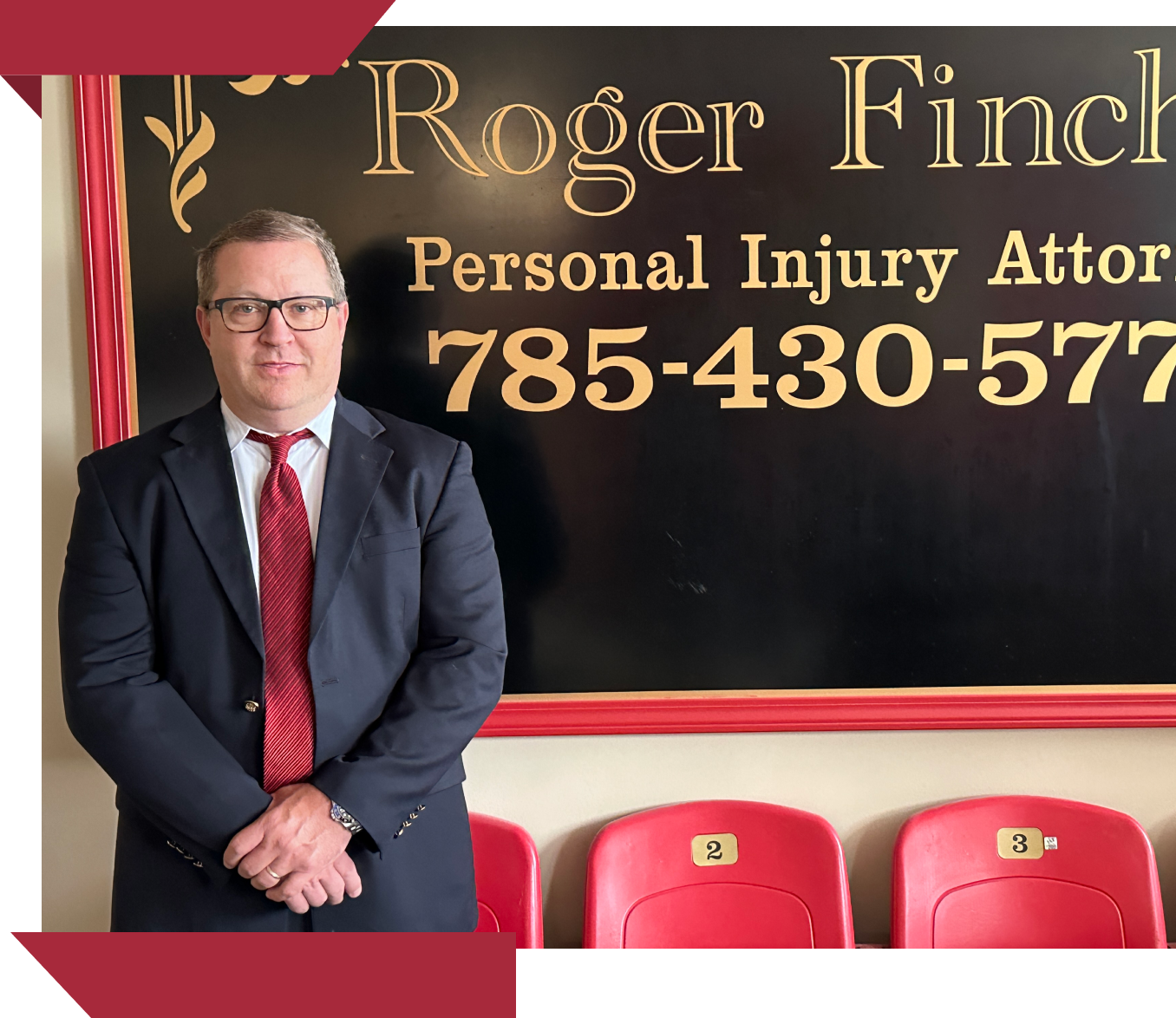
Call an Overland Park product liability lawyer at Fincher Law at 785-510-2259 to schedule a free case evaluation. Our attorneys, including founding attorney Roger Fincher, will review the product, explain the applicable deadlines, and outline the legal options available to you. Bring the product, its packaging, and your medical records if you still have them.
Schedule Your
Free Consultation


How Can We Help You?
How Can We
Help You?
Schedule a Free Consultation Now By Contacting
Our Team at (785) 430-5770 or by completing the form below
Schedule a Free Consultation Now
By Contacting Our Team
at (785) 430-5770
"*" indicates required fields